“We want to provide every biopharma and biotech company with its own intelligence machine that can be built with them. Every use should have the potential to make the system better than it was before. That is basically it.”
— John Phan, Co-founder & CEO, Drylab
Why is rented intelligence a problem?
Today, much of the AI capability scientists use is effectively rented from closed-source providers.
“These systems can be extremely capable, but they are largely general-purpose and external to the scientific organisation. They do not naturally accumulate the lab’s experimental lessons, scientific judgment, failed attempts, preferred methods, or proprietary know-how over time. For routine tasks, that may be enough. But frontier science is rarely ordinary.”
— Nhi Nguyen, Co-founder & CSO, Drylab
Can static, off-the-shelf AI really drive frontier science?
“The answer is no. Biology is highly context-dependent.”
A January 2026 Nature study found that scientists using AI published 3× more, yet AI-assisted research became more concentrated on established, data-rich problems rather than new ones — suggesting that more output does not necessarily mean more novelty.
“Even a specialised AI built for a field such as protein design, pathology, or single-cell analysis may still be an off-the-shelf solution. It was not necessarily built around a particular lab’s targets, experimental system, assays, constraints, historical data, or scientific judgment.
Frontier science is often defined by exactly those specifics. The question is therefore not simply whether an AI is specialised, but whether it can become specialised to your science.”
— Nhi Nguyen, Co-founder & CSO, Drylab
The alternative: Self-Improving Intelligence
The idea is simple: every time scientists use AI, the experience should not only produce results but also contribute intelligence that makes future research better.
“Just as nature adapts and evolves through experience, intelligent systems should learn from mistakes and improve over time. We believe self-improvement is fundamental to building resilient systems. It’s our product philosophy,” said John.
When a scientist corrects a workflow, that lesson should not stay with the individual. It should be retained and reused, turning individual experience into organisational knowledge.
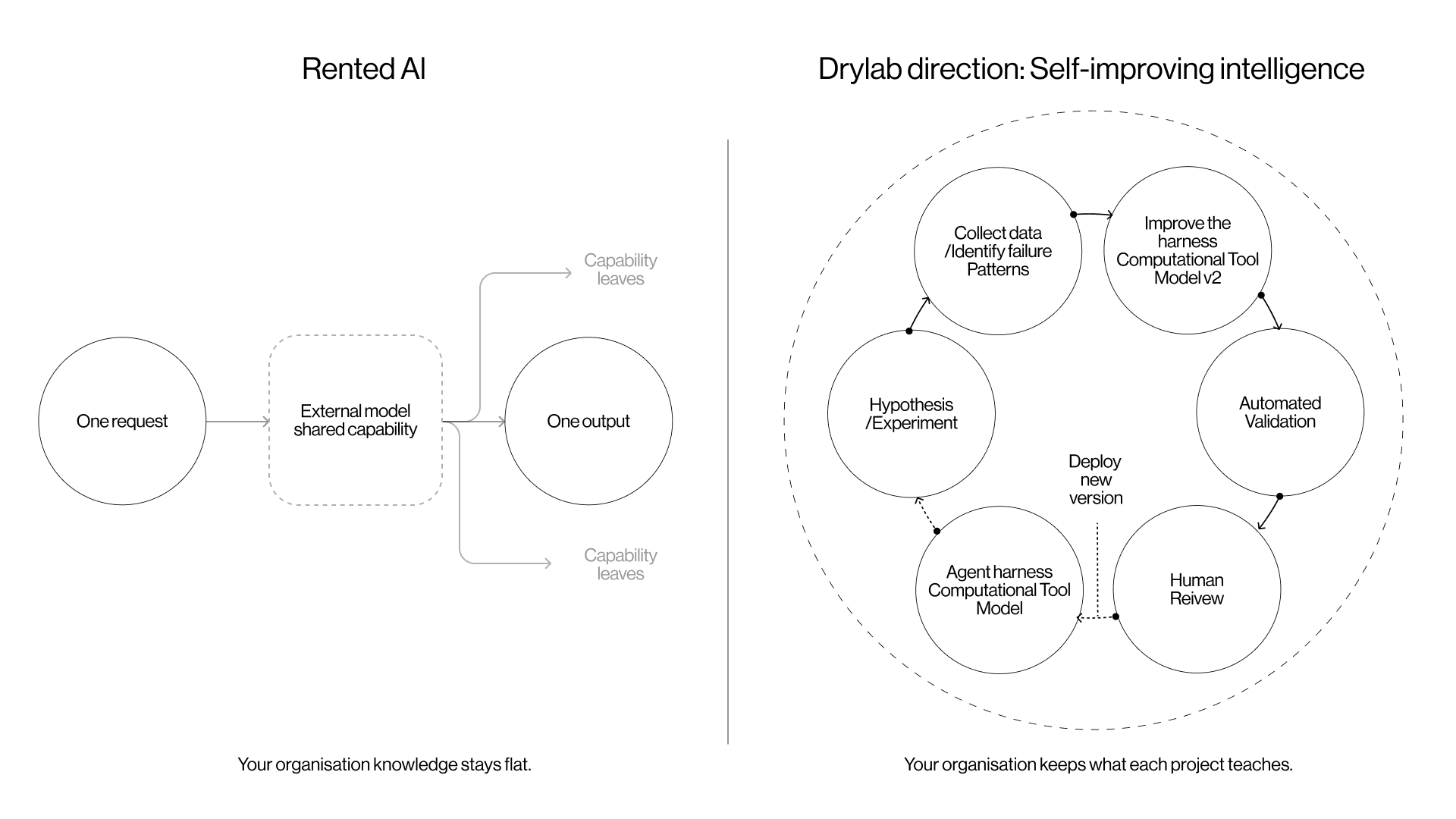
Figure 1. From rented intelligence to self-improving intelligence. Instead of starting over with every experiment, the system retains scientific judgment and workflow improvements for future research.
“Intelligence can evolve at multiple levels. Workflows improve, scientific models adapt, and experimental lessons accumulate. Over time, the system becomes increasingly specialised to how an organisation actually does science, while that accumulated intelligence remains theirs,” said Henry Phan, Co-founder and CTO of Drylab.
The goal is simple: every use should have the potential to make the system better than it was before.
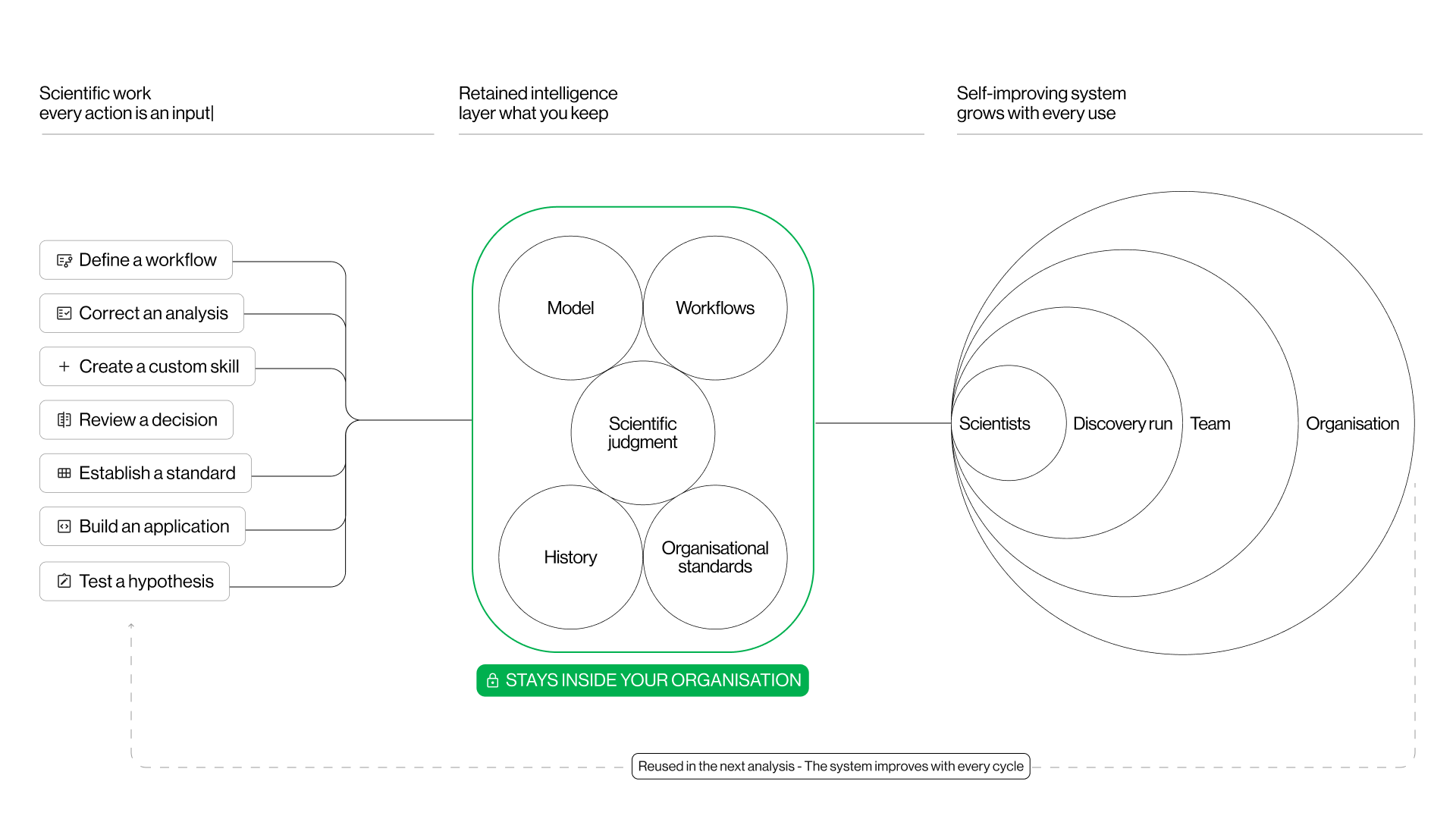
Figure 2. Rented intelligence → Self-improving intelligence. Scientific organisations progressively build intelligence across models, workflows, scientific judgment, organisational standards, and history.
Four levels of scientific intelligence
Intelligence can evolve at multiple levels, from the underlying AI model to the knowledge accumulated across an entire scientific organisation.
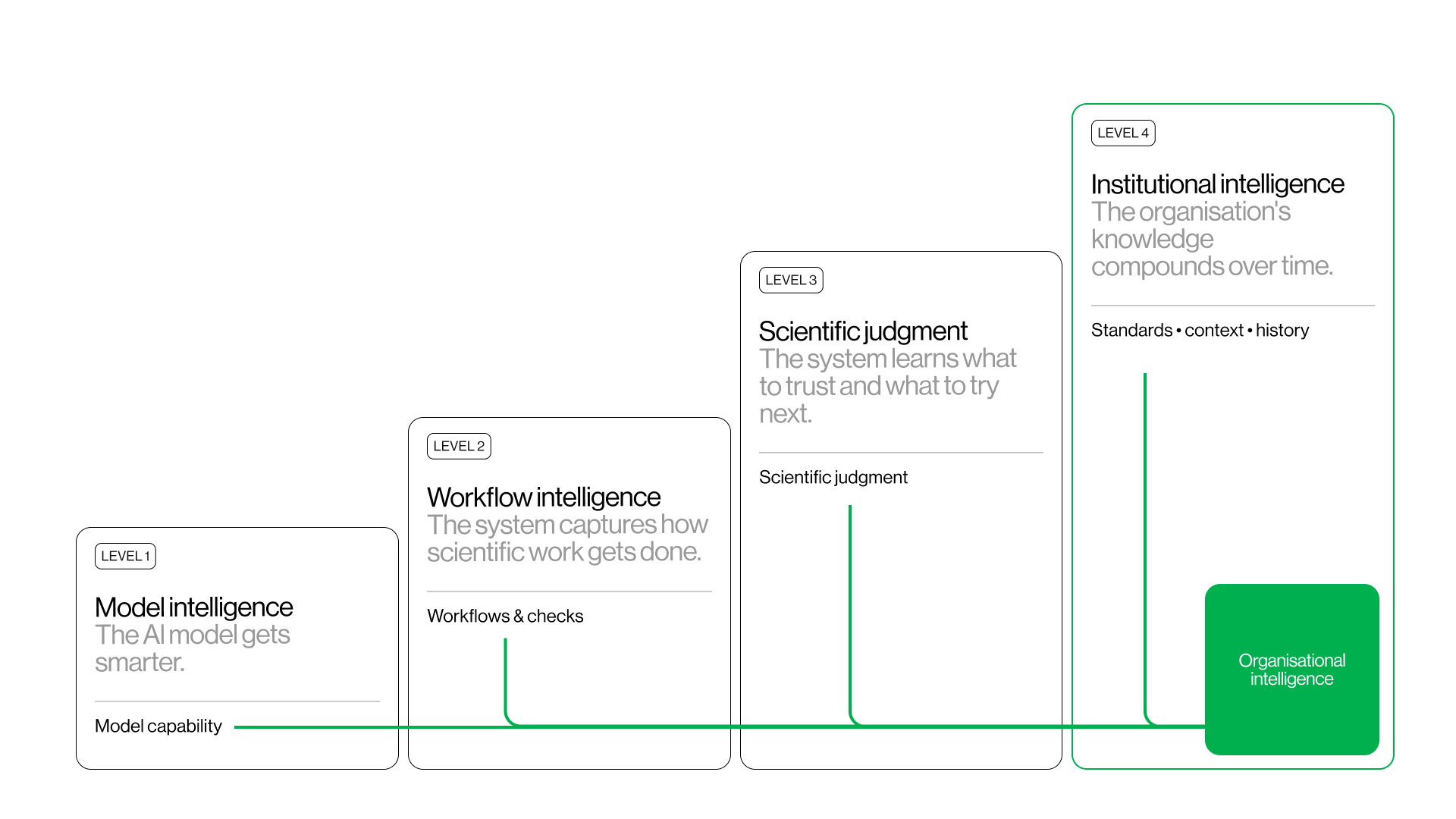
Figure 3. Four levels of scientific intelligence. Each layer retains more of how the organisation does science.
1. Model intelligence
The core underlying AI model gets smarter. Today, Drylab uses both its in-house models and frontier large language models from external providers.
These models can be very large, ranging from 300B to 1T parameters, and require industrial-scale data centre infrastructure to run.
For more resourceful teams, such as pharmaceutical companies, this layer can be customised and improved over time using proprietary data, especially to develop new or rare capabilities needed for frontier research. But for smaller teams, this is often overkill.
2. Workflow intelligence
But the model alone is only the seed. Much of the self-improvement happens in what grows around it: which steps to follow, which thresholds to use, what to check, and when a scientist should step in.
This is Drylab’s strongest level today.
The system allows scientists to create and save custom know-how, retain and build on project context, create their own interactive applications, and export analysis results and application code.
3. Scientific judgment
This becomes especially important at the scientific frontier.
Frontier research rarely has a single accepted workflow or an obvious correct answer. Scientists often work with incomplete evidence, new modalities, unfamiliar experimental systems, and questions that have never been tested before. By definition, they are pushing beyond what is already known.
That is exactly where a static, so-called “frontier” model can become limiting.
To support frontier science, AI needs to become increasingly familiar with the scientific environment in which it operates: what has already been tried, what has failed, what evidence the team trusts, and how that team makes decisions.
By learning this context, AI can begin to engage with more nuanced scientific questions, such as:
- Is this result too uncertain to trust?
- Is this the right method to answer the question?
- Is this hypothesis worth pursuing?
- What should we test next?
And increasingly, it should be able to address these questions autonomously.
How Drylab puts scientific judgment into practice
Figure 4. In scRNA QC + Clustering, three of six steps stop for a researcher decision.
Use case: Autonomous drug discovery
An application for autonomous drug discovery that learns from real scientists’ behaviours and workflows.
At the 2026 OpenADMET PXR Challenge, Drylab’s autonomous discovery engine operated for 7 days without human intervention, ranking Top 9 out of nearly 400 teams in Phase 1 and 23rd out of 100 finalists in Phase 2, demonstrating performance competitive with human-led teams.
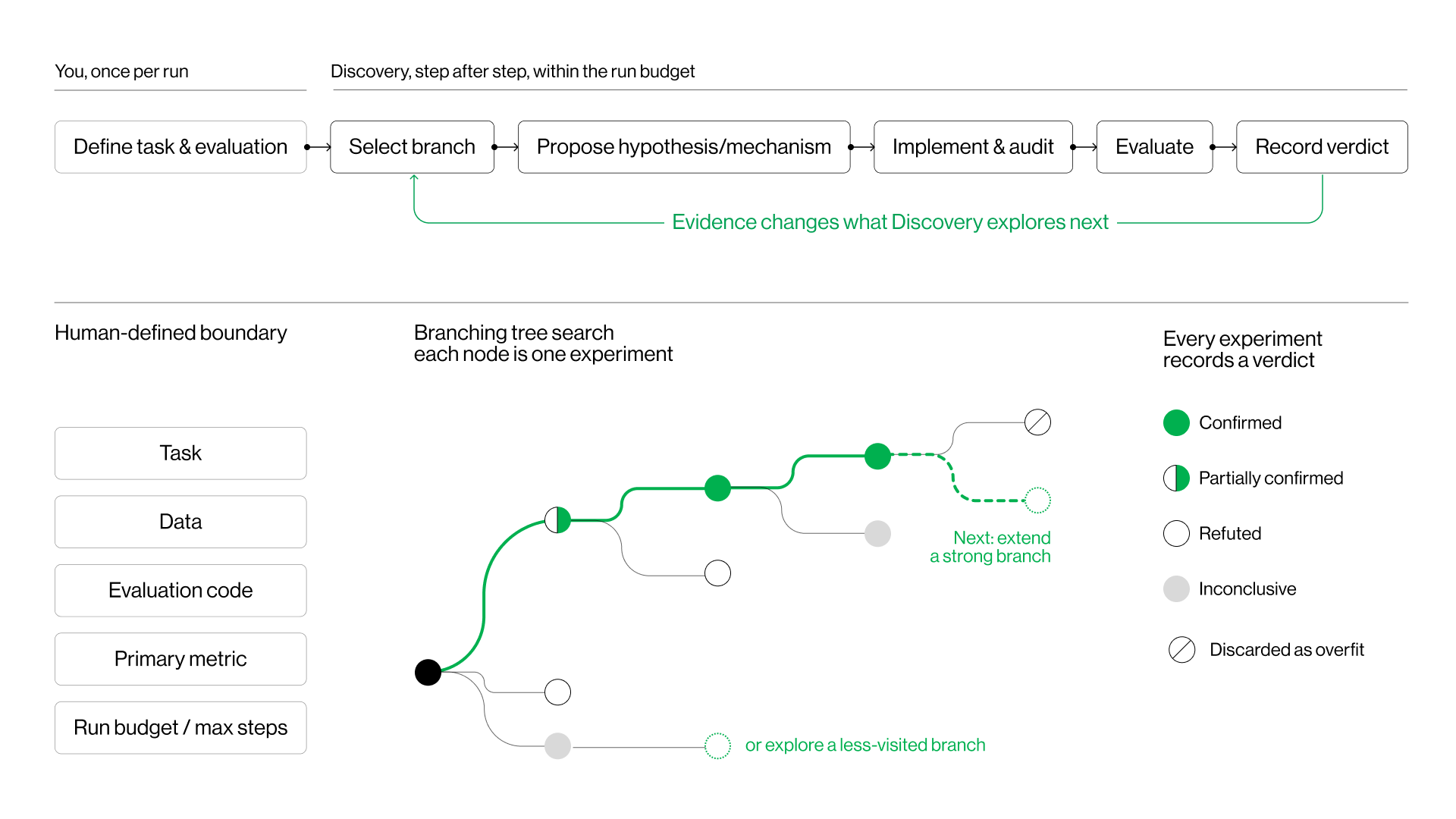
Figure 5. Drylab's autonomous discovery engine explores, evaluates, and improves experimental approaches across iterations.
Read more: Drylab Discovery at the OpenADMET PXR Challenge.
On our back end, some system improvements also preserve scientific judgment, such as knowing when to remain uncertain or ask for review.
Today, these are shared Drylab rules approved by its engineers. Learning the judgment of a specific organisation over time remains the next step.
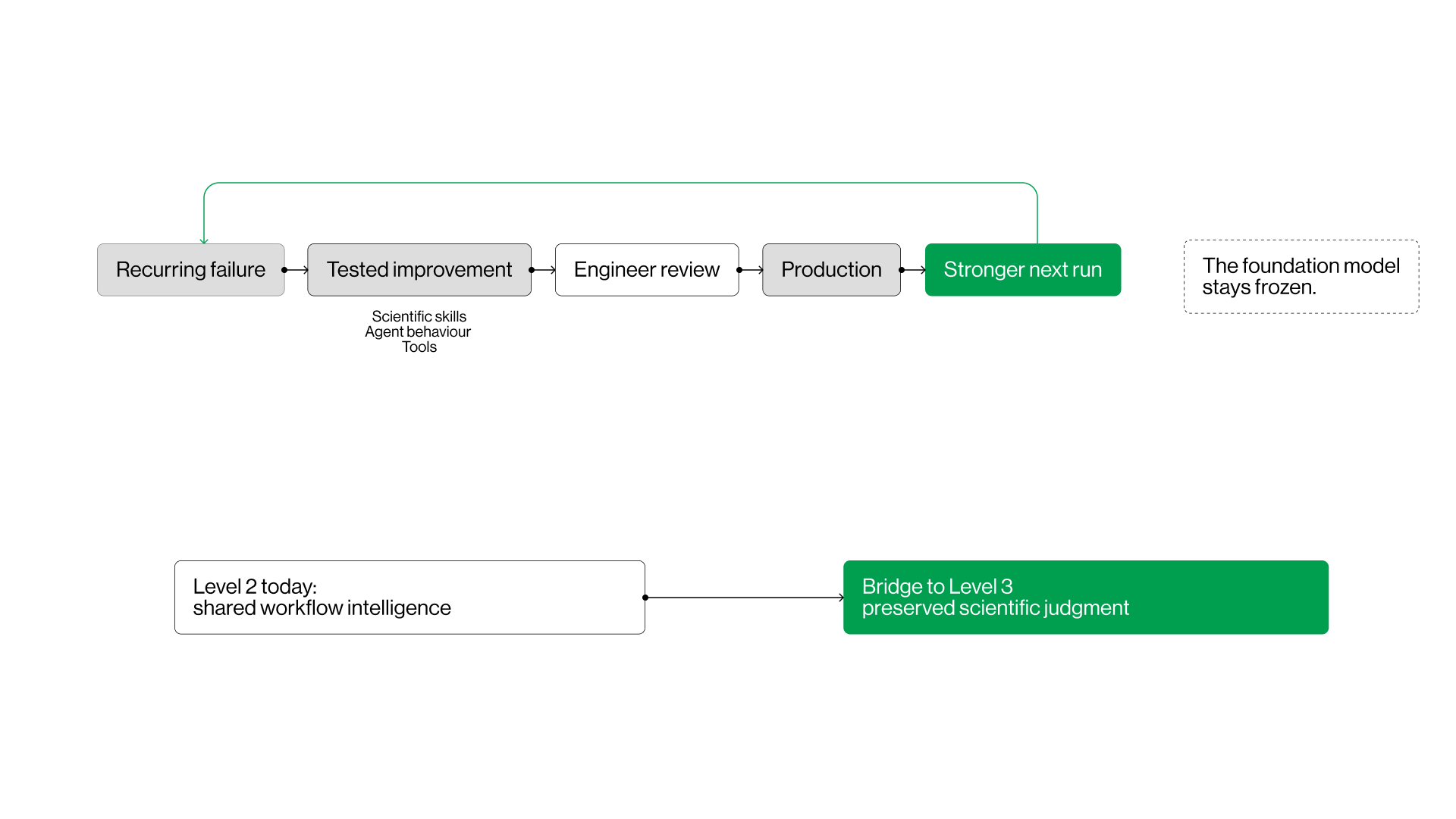
Figure 6. Failures become reusable workflow intelligence. Tested improvements are reviewed before becoming part of the system.
4. Institutional intelligence
Over time, workflows, scientific judgment, standards, and experimental history could become shared intelligence that the entire organisation can reuse.
One scientist’s correction can improve another’s workflow. One project’s failure can prevent another team from repeating it. One programme’s successful model can become the starting point for the next.
This is Drylab’s longer-term vision: self-improving intelligence that adapts to each team, carries knowledge across projects, and grows with the organisation.
Where the intelligence lives
The more useful an AI system becomes to a scientific organisation, the more proprietary knowledge it may reflect.
That creates a different security requirement from simply sending isolated prompts to an external AI service.
If an organisation is going to grow intelligence from its own science, that intelligence needs to be able to remain within an environment the organisation controls.
Drylab is designed to support computing on an institution’s own infrastructure, including environments isolated from external networks and models hosted by the institution itself.
This allows scientific computation and AI processing to remain within infrastructure controlled by the institution.
The broader ambition is for more of the organisation’s workflows, knowledge, and accumulated judgment to remain within that controlled environment.
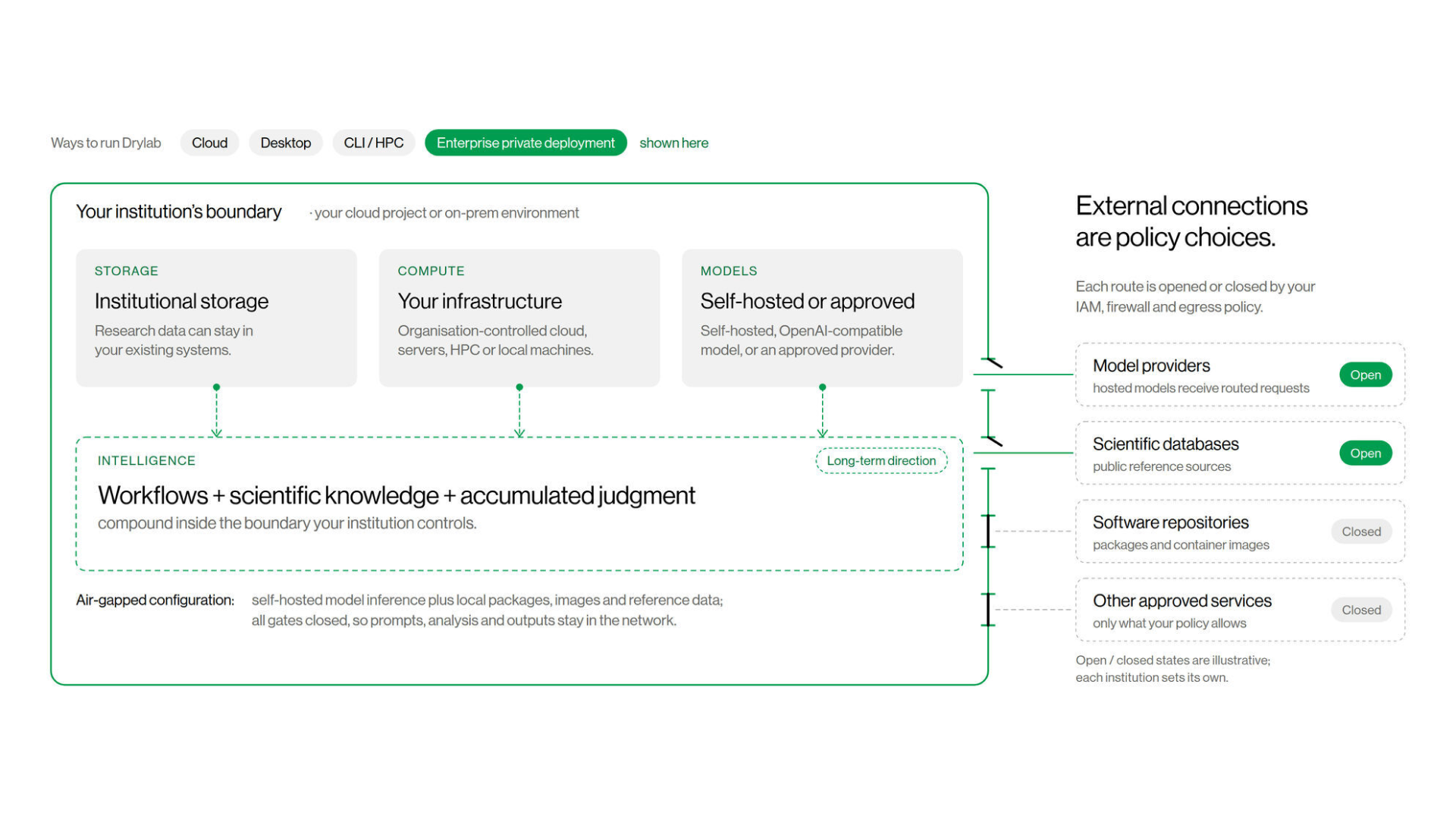
Figure 7. Institutions can determine where data, compute, and AI models operate, keeping scientific intelligence within infrastructure they control.
Growing the intelligence that pushes the frontier
Science is too broad, too specialised, and too fast-moving for the most important intelligence to always come ready-made off the shelf.
The long-term vision is not just to ask scientists to learn how to use AI.
It is to help them grow self-improving intelligence inside their own labs — intelligence shaped by their science, secured by their organisation, and capable of helping them push their scientific boundaries further.
Scientists grow their intelligence. Intelligence helps them push the frontier.